




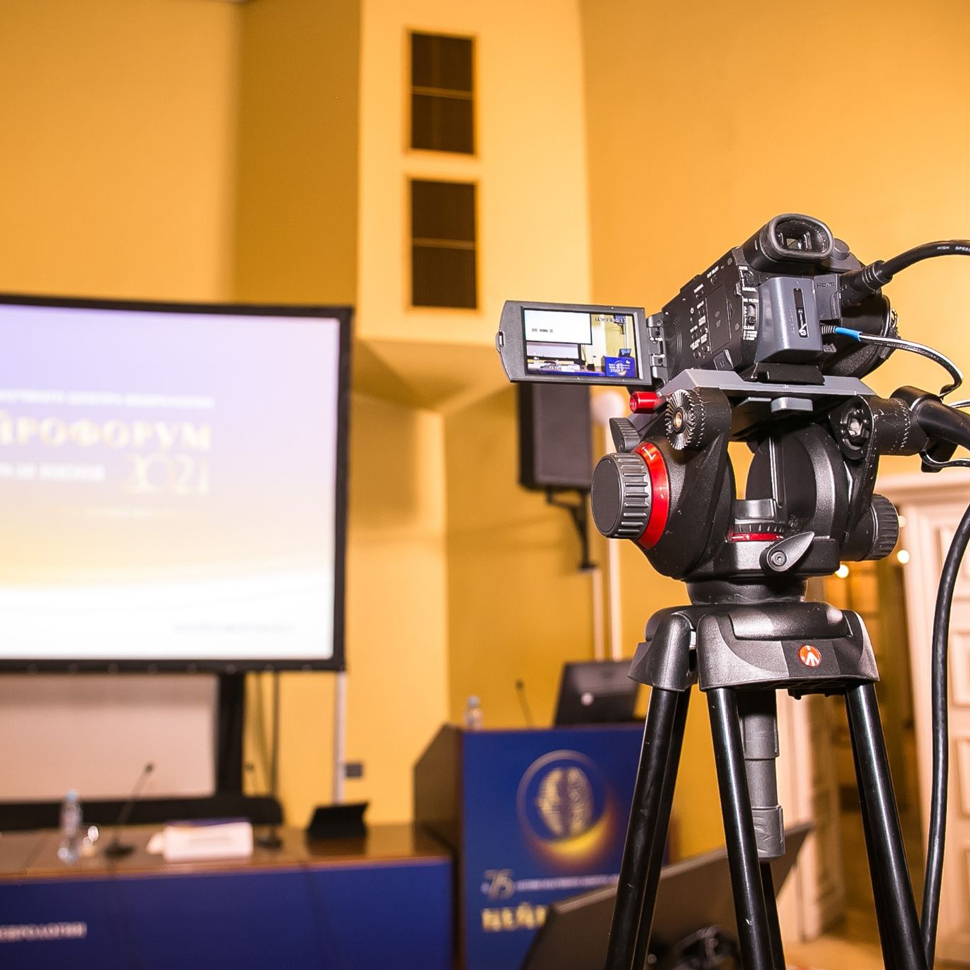
Video broadcasting has become one of the most in‑demand services for modern events. Images can be streamed to a wide range of display devices, including projection screens, plasma panels, seamless video walls, and LED screens, ensuring clear visibility for every audience segment.
Types of video broadcasting
Online live streaming
Real‑time online video streaming enables fully virtual or hybrid events with any number of remote participants. The live feed is transmitted directly to your website, platform, or landing page, allowing registered users to join the event online. Access can be restricted to participants or opened to the general public, depending on your requirements.
Offline video broadcasting
Offline broadcasting projects the event onto large screens at the venue, ideal for big‑scale events on expansive sites. Guests watch the stage action on separate displays, which improves visibility and engagement in large halls or open‑air locations.
Conference video broadcasting (tele‑bridge)
A tele‑bridge connects multiple geographically separated venues, enabling high‑quality video transmission and real‑time dialogue without noticeable delays. This format supports “round‑table” discussions and allows you to run one event across several sites at any distance, whatever the number of locations involved.
Hybrid‑format video broadcasting
Video broadcasting can also be organized in a hybrid mode, combining online and offline elements to match your goals. Whether you need a virtual component for remote audiences, live coverage for local attendees, or both, video broadcasting helps you create a seamless, engaging experience for everyone.


